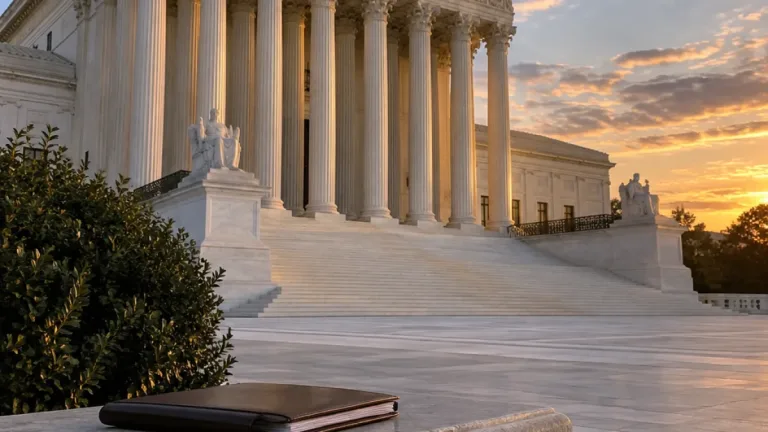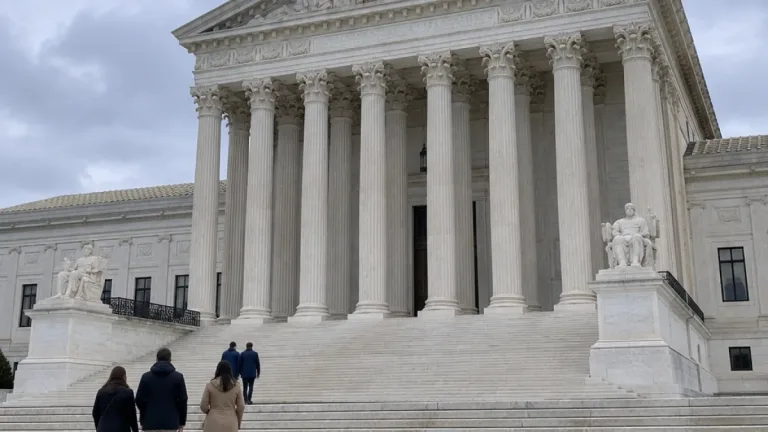
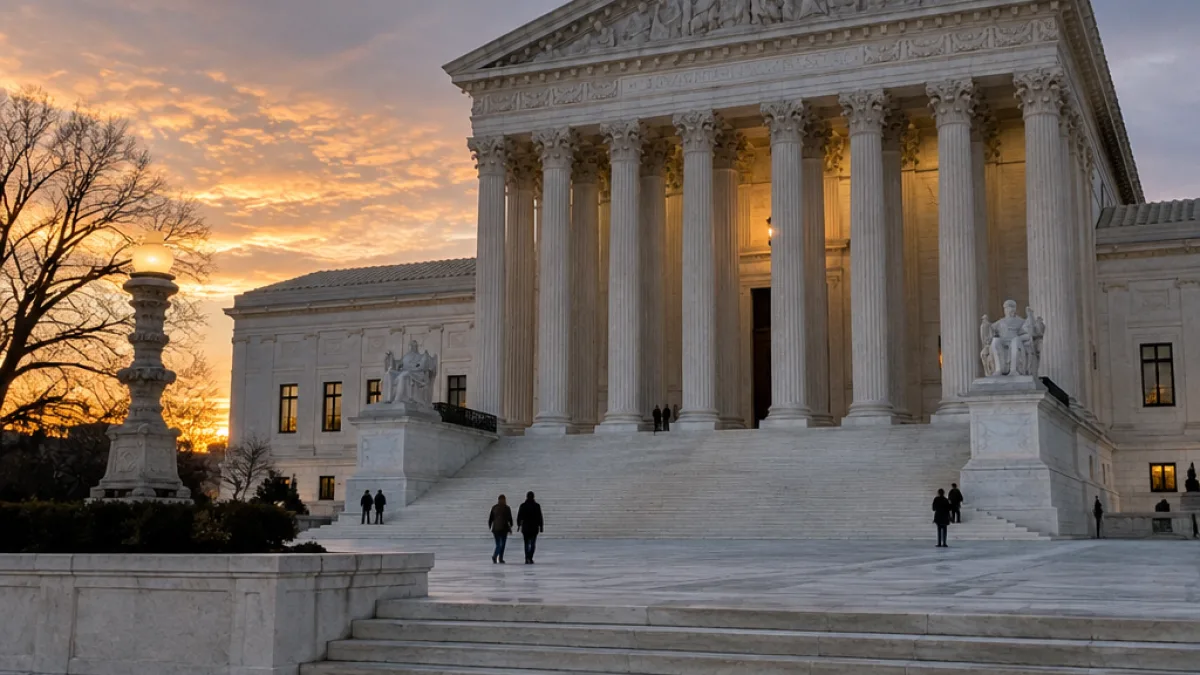
The U.S. Supreme Court on Monday declined to hear a challenge to Maryland laws restricting firearms in several public places, leaving a lower-court decision upholding the restrictions in effect.
The justices’ order involved Katherine Novotny v. Wes Moore, docket No. 25-1324. The appeal was brought by gun owners and advocacy groups against Maryland Gov. Wes Moore and other state officials. The case concerned multiple location-based restrictions rather than a single rule.
The restrictions cover firearms at public demonstrations, on mass transit, at amusement venues, in health care facilities, at businesses that sell alcohol for consumption on site and on state park and forest land. The Supreme Court’s decision not to hear the case leaves those provisions in place under the lower-court ruling.
“historical tradition of firearm regulation” — Justice Clarence Thomas
Justice Clarence Thomas agreed with the court’s refusal to review the appeal but issued a separate statement expressing skepticism about the breadth of the challenge. He said the different categories of restricted locations could involve different historical traditions, making the case difficult to evaluate as a single appeal.
How the case reached the court
The U.S. Court of Appeals for the 4th Circuit upheld the Maryland restrictions in a Jan. 20 opinion in Kipke v. Moore and related appeals. Judge Roger Gregory wrote the majority opinion. The Supreme Court docket lists four related 4th Circuit appeal numbers and records litigation involving several Maryland provisions.
The challengers asked the Supreme Court to review the 4th Circuit decision after proceedings that included a state opposition brief in August and a reply from the challengers in September. The petition was considered at several court conferences before the justices issued their disposition on Monday.
- Case: Katherine Novotny v. Wes Moore, No. 25-1324
- Lower court: 4th U.S. Circuit Court of Appeals
- Supreme Court action: Appeal declined on Nov. 16
Thomas’s statement kept his concerns about the restrictions separate from the court’s decision not to take the case. The refusal was not a ruling addressing each Maryland restriction independently; it left the 4th Circuit’s decision as the governing ruling in the litigation described in the court docket.