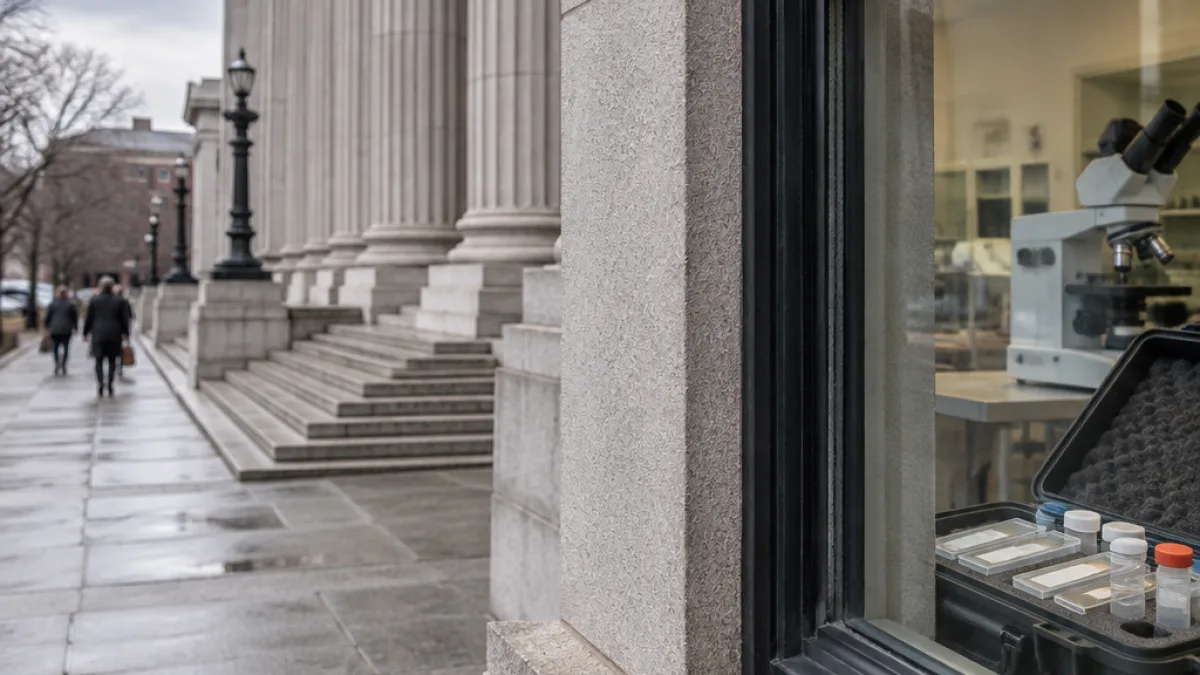
A federal judge in Massachusetts dismissed the criminal case against Kseniia Petrova, a Russian-born biomedical researcher at Harvard University who had been accused of bringing frog embryos and other research materials into the United States.
U.S. prosecutors asked the court to dismiss the charges Tuesday, and District Judge Leo T. Sorokin issued the order Wednesday. The case involved a charge of smuggling goods into the country after officers at Boston’s Logan Airport found clawed frog embryos, paraffin slides and other samples in Petrova’s possession.
Prosecutors cited investigative information
The request to end the prosecution followed an April order by a federal magistrate judge that allowed Petrova to seek evidence supporting her argument that the case was brought against her vindictively. Prosecutors said they considered those allegations without merit but argued that responding to them would require the disclosure of nonpublic information about the operations and investigative methods of U.S. Customs and Border Protection.
“Throughout these proceedings, Ms. Petrova has shown tremendous courage, and we are relieved that this chapter of her terrible ordeal is now over,” Petrova’s attorney, Daniel N. Marx, said in a statement.
Marx also said the Justice Department should not have filed what he described as an unusual smuggling case. He said Petrova’s work involved nonliving and nontoxic scientific samples and that the materials posed no danger. Petrova has maintained that the embryos and other items were part of her research into aging.
- Petrova was detained by immigration authorities at Logan Airport in February 2025 after returning from Paris.
- Her J-1 scholar visa was canceled after her detention.
- Federal prosecutors filed the criminal case in May 2025 while Petrova was in immigration detention.
Petrova was later placed in immigration proceedings, separate from the criminal prosecution. Earlier in 2026, a judge in Vermont ruled that the cancellation of her visa was unlawful. The Massachusetts dismissal resolves the criminal charges described in the case, while the available account also identifies the separate immigration proceedings as part of Petrova’s legal history.
The case drew attention because it connected federal border enforcement with the handling of biological research materials by an academic scientist. The dismissal came after prosecutors chose to withdraw the criminal case rather than provide the evidence sought in Petrova’s challenge to the prosecution.