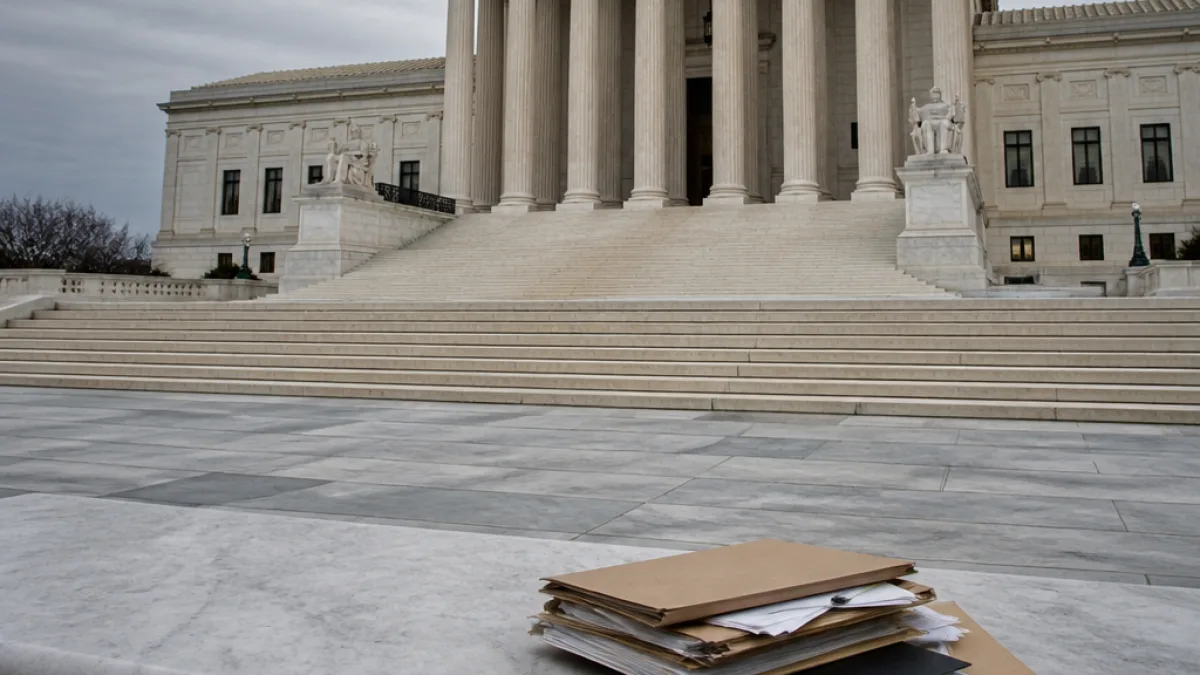
The U.S. Supreme Court on Oct. 27 rejected an emergency appeal seeking to restore immigration judges’ authority to temporarily remove deportation cases from active calendars, leaving in effect a nationwide bar on a Biden‑era rule known as administrative closure.
what the court did
The justices issued a one‑sentence, unsigned order denying an application from three cities — Baltimore; Columbus, Ohio; and New Haven, Connecticut — and a legal services group that had asked the court to suspend a federal district court judgment that had invalidated the regulation. No justice publicly registered a dissent.
background of the dispute
The contested practice, administrative closure, allowed immigration judges to pause removal proceedings while immigrants pursued other forms of relief, such as humanitarian protections or visa petitions. Officials and advocates said the tool had been used by crime victims cooperating with law enforcement, children seeking special protections, and immigrants awaiting decisions on other applications; cases closed administratively could later be reopened.
- 360,000 immigrants received administrative closure between 1990 and 2026, according to government statistics cited in filings.
- The Executive Office for Immigration Review finalized a regulation restoring the practice in 2024.
- Texas sued to block the regulation in 2026; the Justice Department agreed with Texas the same day that the rule was unlawful, and U.S. District Judge Reed O'Connor entered a consent judgment vacating the regulation nationwide.
arguments from the parties
The cities and Centro Legal de la Raza argued they should be allowed to defend the regulation and said the settlement between Texas and the Justice Department amounted to an improper shortcut to dismantle longstanding immigration procedures. Advocacy groups described the change as a threat to families, victims and communities that relied on judges’ discretion.
The Justice Department urged the Supreme Court to deny emergency relief, telling the justices the cities lacked legal standing and had not demonstrated imminent harm. In its filings the department urged the court against allowing petitioners to seek extraordinary interim relief while the underlying litigation proceeds.
what remains
With the court’s denial, immigration judges remain constrained from using the 2024 regulation to administratively close cases, and proceedings can move forward while applicants pursue other relief. The broader litigation over the validity of the rule and the terms of the settlement between Texas and the Justice Department is ongoing in the federal courts.
Legal challenges, settlements and appeals in the federal court system will determine whether administrative closure can be reinstated by rule or statute in the future, or whether the practice will remain curtailed.