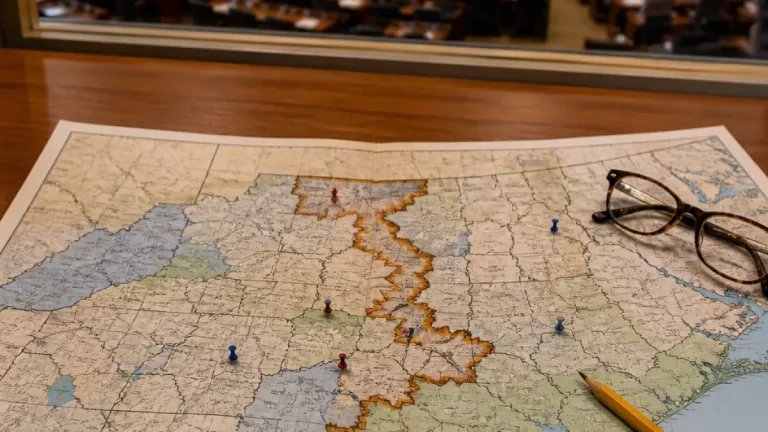

Democrats need a net gain of three seats to take control of the U.S. House of Representatives, according to a seat-by-seat overview released this week that maps the roughly 70 contests most likely to decide the chamber.
current margin and the arithmetic
The analysis begins from a baseline in which the GOP holds a 219-215 advantage if the chamber’s existing vacancies were filled in line with their prior partisan representation. That count reflects one member who now identifies as an independent, former Rep. Kevin Kiley of California, leaving Democrats three seats short of the 218 needed for a majority.
Redistricting has already moved several seats. The overview notes eight districts expected to flip party control because of newly drawn maps: five are projected to favor Republicans and three are projected to favor Democrats. Those shifts represent about one-sixth of the 435 House seats; the remaining five-sixths are viewed as solid or likely to be retained by the incumbent party.
which seats matter
The report identifies roughly 70 races as competitive and provides a first cut at where Democrats could find the pickups necessary to win the gavel. It also highlights a group of Democratic-held districts that are vulnerable to Republican gains.
- Seats expected to flip to Republicans because of redistricting: Florida’s 9th, Louisiana’s 6th, Tennessee’s 9th, Texas’ 9th and Texas’ 32nd.
- Seats expected to flip to Democrats because of redistricting: three districts identified by the analysis (noted collectively, not by individual numbers in the summary).
On the Democratic side, the analysis lists 11 seats the party currently holds that are at risk of flipping to Republicans. Examples cited include:
- Alabama’s 2nd District, held by Democratic Rep. Shomari Figures, in a district carried by Donald Trump by 15 points in 2024.
- Maine’s 2nd District, an open seat formerly held by Democratic Rep. Jared Golden, in a district Trump won by 9 points in 2024.
- Texas’ 35th District, an open seat previously held by Democratic Rep. Greg Casar, in a district Trump won by 11 points in 2024.
- Florida’s 22nd District, now open after Democratic Rep. Lois Frankel left the seat, in a district Trump carried by 14 points in 2024.
- Ohio’s 9th District, where Democratic Rep. Marcy Kaptur holds a seat in a district Trump won by 11 points in 2024.
- Florida’s 14th District, where Democratic Rep. Kathy Castor is the incumbent in a district carried by Trump in 2024.
The overview adjusts previous margins of victory — including the 2024 presidential vote — to reflect new district lines when needed. It treats vacancies and party switches as part of the starting tally and examines where Democrats could realize the small net gain that would hand them the majority.
Campaign strategists on both sides have flagged that a modest number of seat changes will determine control because the chamber’s current balance is narrow. The analysis provides a district-by-district resource for journalists, campaigns and voters tracking the dozens of contests that, collectively, will decide which party leads the House when the new Congress convenes.