
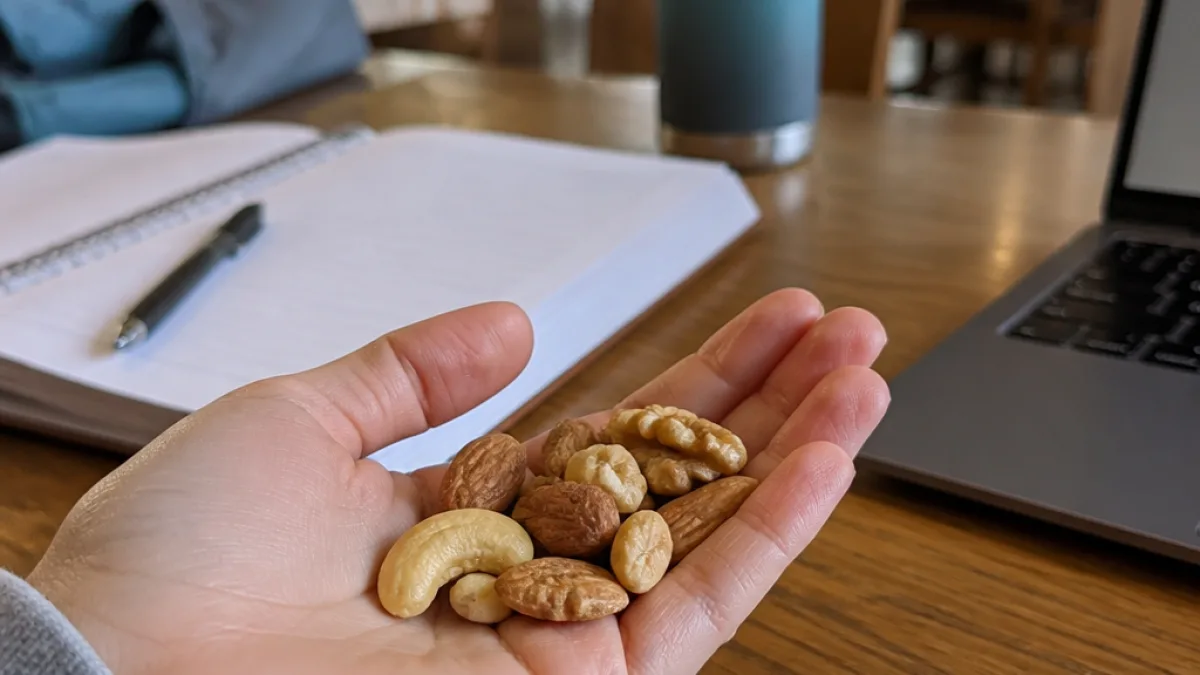
New research suggests a modest daily portion of nuts may be associated with a lower risk of developing high blood pressure, a common and preventable driver of heart disease.
Study and findings
A meta-analysis published in the British Journal of Nutrition compared nut intake and hypertension diagnoses among nearly 150,000 participants and found that people who ate nuts regularly were less likely to develop high blood pressure than those who did not. The largest reduction in risk — about 26% — appeared among people who consumed roughly 30 to 35 grams of nuts per day, about a small handful, compared with those who ate none.
Experts weigh in
Nutrition professionals who reviewed the study said the results show how small, sustainable changes can contribute to long‑term heart health without requiring major, immediate diet overhauls.
“Small, sustainable dietary changes can make a meaningful difference in long-term heart health,” said Melissa Mroz-Planells, D.C.N., R.D.N., a spokesperson for the Academy of Nutrition and Dietetics.
Cardiology and nutrition specialists emphasized that the benefit appeared strongest at about one serving a day rather than at very high intakes, and that consistent habits matter more than occasional consumption.
What the research does and does not say
The analysis pooled results across multiple studies to look for an association between nut consumption and incident hypertension. Researchers reported a lower likelihood of a hypertension diagnosis among people with regular nut intake, with the most pronounced association around 30–35 grams daily. The study design shows correlation, not proof of direct cause and effect, and authors and experts noted that overall dietary patterns and other lifestyle factors also influence blood pressure.
- Portion size: The association was strongest at about one serving, roughly 30–35 grams a day.
- Population studied: Nearly 150,000 participants were included in the pooled analysis.
- Magnitude: The largest observed difference was about a 26% lower risk of developing high blood pressure compared with non‑consumers.
Nutritionists say nuts provide unsaturated fats, fiber, magnesium and other nutrients that are consistent with heart‑healthy eating patterns such as the Dietary Approaches to Stop Hypertension (DASH) diet. They also cautioned that nuts are calorie‑dense, so portion control is important for people watching energy intake.
Experts advising young adults and college students said that adding a small daily serving of nuts can be an easy, portable way to improve the overall nutritional quality of snacks and meals, but it should complement other blood‑pressure friendly habits such as maintaining a healthy weight, staying active and limiting excessive sodium and alcohol.
The Academy of Nutrition and Dietetics and clinical cardiologists quoted in coverage encouraged people to discuss individual dietary choices with a registered dietitian or clinician when making changes to manage chronic conditions or medications.